

Effective PBIS policies depend on clarity, consistency, and a school environment where expectations are easy to understand and realistic to follow. That becomes difficult when student phones are present in every lesson, hallway transition, and social interaction. In many schools, the issue is no longer whether phones affect attention and behavior, but how to manage them in a way that supports learning without creating constant confrontation. This is where a Safe Pouch can become more than a practical accessory. Used well, it becomes a policy tool that helps schools align device expectations with the core goals of Positive Behavioral Interventions and Supports.
PBIS works best when expectations are visible, fair, and easy to enforce
PBIS is designed to create positive, predictable school cultures. At its best, it gives students clear behavioral expectations, reinforces what success looks like, and reduces the need for reactive discipline. But phone use can quietly undermine that structure. A school may have strong values, thoughtful staff training, and a well-defined tiered support model, yet still lose momentum if every classroom handles devices differently.
When one teacher allows phones during independent work, another confiscates them immediately, and a third spends the first ten minutes of class negotiating over earbuds and screens, students receive mixed messages. That inconsistency weakens trust in the policy itself. Students start to see expectations as flexible, personal, or unfair. Staff members become frustrated because enforcement depends less on schoolwide systems and more on individual tolerance.
A Safe Pouch helps close that gap. It creates a consistent routine that does not require repeated warnings, public corrections, or debates about whether a phone was actually being used. Instead of relying on constant vigilance, the school builds a visible structure into the day. That is highly compatible with PBIS, which works best when routines are simple, teachable, and repeatable.

Why a Safe Pouch supports the core principles of PBIS
Schools often think of phone management as a discipline issue, but within PBIS it is better understood as an environmental design issue. The goal is not simply to catch misuse. The goal is to create conditions that make the desired behavior more likely. A lockable phone pouch does exactly that by reducing temptation, eliminating ambiguity, and shifting attention back to the learning environment.
When students place their devices into a pouch at the start of the school day or class period, expectations become concrete. They know what is required. Staff know what to reinforce. Most importantly, the policy becomes less personal. Instead of repeated individual corrections, the routine applies across the board.
| PBIS objective | How a Safe Pouch helps |
|---|---|
| Consistency | Creates a schoolwide routine that applies the same expectation to all students. |
| Prevention | Reduces opportunities for distraction before they lead to disruption. |
| De-escalation | Lowers the need for public confrontation over phone use during class. |
| Equity | Supports fair enforcement rather than teacher-by-teacher discretion. |
| Instructional focus | Helps protect lesson time, transitions, and student engagement. |
This preventive quality matters. PBIS is not centered on punishment. It is centered on teaching and reinforcing expected behavior. A Safe Pouch fits that framework because it removes a common trigger for conflict while preserving students’ personal property. Students still have possession of their phone, but the boundary around use is clearer and easier to maintain.
The biggest policy benefits are consistency, equity, and fewer daily power struggles
One of the most overlooked benefits of a pouch-based phone policy is the effect it has on school climate. Teachers often describe phone enforcement as exhausting not because it is rare, but because it is relentless. A small issue repeated all day can consume a large amount of emotional energy. Students may also feel targeted if enforcement appears selective or if consequences vary by classroom.
By contrast, a consistent pouch routine reduces friction at the point where conflict usually begins. It allows schools to move from reactive correction to proactive structure. That matters for administrators, classroom teachers, support staff, and students alike.
- It protects instructional time. Teachers spend less time redirecting students and more time teaching.
- It reduces public conflict. Students are less likely to be corrected in front of peers for checking a device.
- It improves fairness. Expectations no longer depend so heavily on who is teaching the class.
- It supports relationship-based discipline. Staff can focus on coaching and support rather than repeated phone battles.
- It strengthens policy credibility. Students are more likely to respect a system that feels stable and predictable.
For PBIS teams, that shift is significant. A policy only succeeds when it can be implemented with fidelity. If staff members feel they are constantly improvising, the policy is unlikely to last. A Safe Pouch makes the expectation easier to carry out in daily practice, which is often the difference between a rule that exists on paper and a system that truly changes behavior.
How to integrate a Safe Pouch into PBIS without making it punitive
The strongest school policies do not treat phone management as a standalone crackdown. They place it inside a broader culture of respect, learning, and clear expectations. For that reason, implementation matters as much as the tool itself. A pouch should be presented as part of a supportive schoolwide routine, not as a symbol of mistrust.
- Teach the routine explicitly. Show students when the pouch is used, where unlocking happens, and what the expectation looks like in practice.
- Explain the purpose. Connect the routine to learning, attention, safety, and respectful school culture rather than simple control.
- Train staff for consistency. Every adult should understand how the policy works and how to respond when a student does not follow it.
- Build in reasonable exceptions. Schools should have clear procedures for medical needs, accessibility accommodations, and approved educational use where appropriate.
- Reinforce compliance positively. PBIS works best when schools notice and reinforce successful routines, not only violations.
This approach keeps the policy aligned with PBIS principles. Students are not left guessing. Staff are not forced into constant judgment calls. The routine becomes part of the school day in the same way as arrival procedures, hallway expectations, or classroom transitions.
It is also important for leadership teams to review implementation after rollout. Are certain times of day creating confusion? Do students understand unlocking procedures? Are teachers applying the system consistently? A strong pouch policy should feel orderly and calm, not complicated or adversarial.
What schools should look for in a Safe Pouch system
Not every device-management approach supports PBIS equally well. Some systems create extra burden for staff, while others are too informal to build reliable habits. Schools considering a pouch-based solution should focus on durability, ease of daily use, clear locking and unlocking procedures, and compatibility with existing routines.
They should also consider whether the system can be introduced in a way that preserves dignity and minimizes disruption. A good pouch solution should help a school run more smoothly, not add another layer of confusion. Schools evaluating a practical option can review the Safe Pouch offered by Win Elements as part of a broader device-management plan.
The right choice is one that supports policy implementation in real classrooms, with real students, and under real time pressures. In that sense, the pouch is not the entire answer. It is a tool that works best when paired with staff alignment, family communication, and PBIS-based expectations.
Conclusion: a Safe Pouch turns phone policy into a workable schoolwide routine
PBIS policies are most effective when they reduce ambiguity, prevent avoidable conflict, and create school environments where positive behavior is easier to sustain. Student phone use challenges all three of those goals when schools rely only on verbal reminders or uneven classroom rules. A Safe Pouch offers a more stable alternative. It supports consistency, protects learning time, and helps staff enforce expectations without turning every lesson into a negotiation.
For schools trying to make PBIS more practical in everyday operations, phone management cannot remain an afterthought. It has to be part of the system design. When implemented thoughtfully, a Safe Pouch helps transform a recurring source of distraction into a clear, teachable routine that supports the culture schools are working to build.
************
Want to get more details?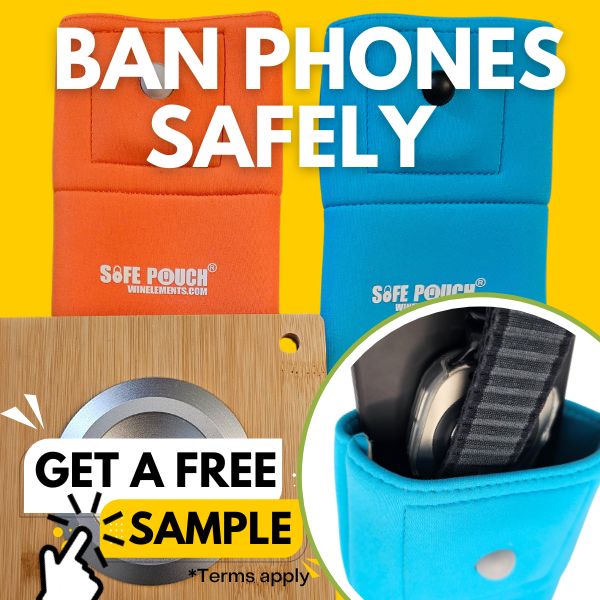
Win Elements | Lockable Phone Pouch
https://www.winelements.com/
Los Angeles, United States
Patented lockable phone pouches with multi-tiered lockers for phone locking pouches.
